




Święty Wojciech – an online bookshop built on Magento 2
- Magento 2
- Multistore
- Data migration
- Comarch ERP XL
- Elibri
- Elasticsearch
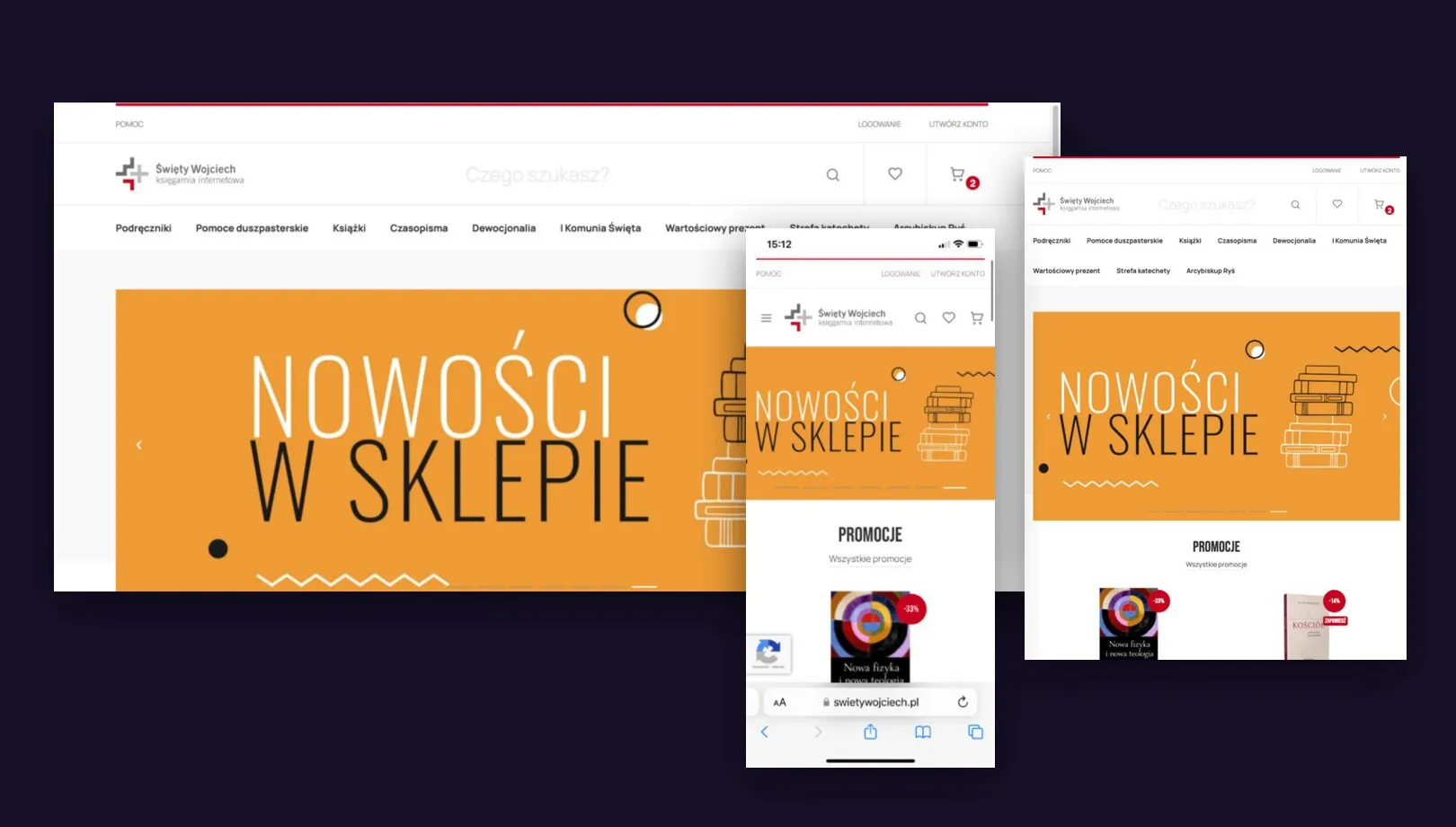
Key facts about the project
Magento 2
A new e‑commerce engine, implemented in place of the solution the store ran on.
Multistore
Magento's own feature, used to bring the content of every online store the organisation runs under one roof.
Comarch ERP XL
An integration covering stock levels, order statuses and the passing on of fulfilment confirmations and shipping labels.
Elibri
A renewed integration with the system the bookshop uses to distribute digital products.
Project scope
The functional and visual design, Magento 2, multistore, a data migration, integrations with Comarch ERP XL and Elibri, and the features an online bookshop needs.
Technologies
Magento 2, Elasticsearch, Comarch ERP XL, Elibri.
The engine in place stopped being enough for a growing bookshop
The Święty Wojciech online bookshop is part of Święty Wojciech Dom Medialny, a publisher trading since 1897. It sells the publisher's own titles alongside other publishers' — e-books and audiobooks among them.
As the bookshop grew, the e‑commerce engine it ran on proved insufficient. After an analysis of what the business needed, the decision was to implement a new store on Magento 2.
Changing platform also meant moving the most important data out of the previous system and connecting the store to Elibri again. The project covered an integration with Comarch ERP XL as well, to automate part of the work that had been done by hand.
The platform change covered data, integrations and processes particular to a bookshop
- 01
Magento 2 and running several stores
The new bookshop was implemented on Magento 2. Magento's own multistore feature was to bring the content of every online store the organisation runs into one interface.
- 02
Migrating data out of the previous system
The data needed to keep serving customers and to keep the content had to move to Magento 2 — customer accounts, orders, records of e-books already bought and the blog among them.
- 03
Connecting Magento 2 to Comarch ERP XL
The integration was to automate part of the work done by hand until then, and to cover stock levels, order statuses and the information tied to shipping.
- 04
A renewed integration with Elibri
The bookshop had used Elibri before the platform change. Implementing Magento 2 meant connecting the two systems again, so that digital products could be sold securely.
- 05
Features that follow from how a bookshop sells
The scope covered magazine subscriptions, samples of books, product priorities, search on catalogue attributes, pre-orders and announcements, audio material, product sets and the note on how much is missing for free delivery.
From a new interface design through the migration, the integrations and the selling features
Delivery covered preparing the new store on Magento 2 and moving over — or rebuilding — the processes the bookshop needed to keep selling.
See our Magento 2 implementations- 01
The functional and visual design
The first phase of delivery produced a new functional and visual layout for the online bookshop.
- 02
Magento 2 and multistore
The new store was built on Magento 2. The project used Magento's own multistore feature, which allowed the content of every online store the organisation runs to be managed from one interface.
- 03
Migrating the most important data
Customer accounts, archived and current orders, records of e-books bought earlier and the blog — its articles, images and identifying data — were imported into Magento 2.
- 04
The Comarch ERP XL integration
The bookshop was connected to Comarch ERP XL. The integration covered stock levels, the automatic export of order statuses from Magento to the ERP, and the passing of a fulfilled order's confirmation, together with the shipping label, from the ERP back to the sales platform.
- 05
A renewed integration with Elibri
After the platform change the store was connected to Elibri again. The integration covered the secure sale of digital items, access to purchased e-books and audiobooks from the customer account, and the option of watermarking digital files.
- 06
Features built for the bookshop
Among the features delivered: PDF samples of books, magazine subscriptions, a product-priority mechanism, an adapted Elasticsearch module, pre-order and announcement product pages, the option of adding mp3 files to product descriptions, product sets and a „free delivery from…” module.
Magento 2 connected to Comarch ERP XL and Elibri
The Magento 2 platform was integrated with Comarch ERP XL and with Elibri, the system that manages the bookshop's digital-publishing data. What each integration covers follows from the processes behind it.
Systems connected to the platform
- Comarch ERP XL
- Elibri
Sales platform
Magento 2
Multistore
Comarch ERP XL carries the publisher's operations: stock levels, order handling and the documents tied to shipping. Elibri runs the distribution of digital files — access to purchased e-books and audiobooks, and watermarking. Multistore is not a system beside the platform but a feature of it: the content of every online store the organisation runs is managed from one interface.
What each part does in this project
- Comarch ERP XL
- Connecting the store's stock levels to the ERP, exporting order statuses automatically from Magento to the ERP, and passing a fulfilled order's confirmation, together with the shipping label, from the ERP back to the sales platform.
- Elibri
- The secure sale of digital items, access to purchased e-books and audiobooks from the customer account, and the option for the store team to watermark digital files.
- Multistore
- Managing the content of every online store the organisation runs from one interface.
Order statuses travel from Magento 2 to the ERP, and the fulfilment confirmation with its shipping label travels back from the ERP to the sales platform.
Recurring subscriptions handled between Magento 2 and the ERP
The bookshop sells subscriptions delivered on a cycle. Handling them logistically called for automation and for splitting the structure of orders that carry a subscribed magazine.
Designed this way, the process automated the handling of subscription orders and separated it from the rest of the products in the bookshop's range.
How the process runs
- 01
A customer buys a subscription, which is then sent on a cycle to the address they gave.
- 02
The exchange of information designed for this connects Magento 2 to the ERP system.
- 03
Every subscription delivery is handled as an order of its own, separate from the other products.
Features that match how books are searched for and bought
The scope followed from the way readers choose a title: from a sample of the book and search on publishing data through to product sets and the note about the free-delivery threshold.
A PDF sample of the book
On the product page a user can download a sample of the book as a PDF file and read part of the publication before buying.
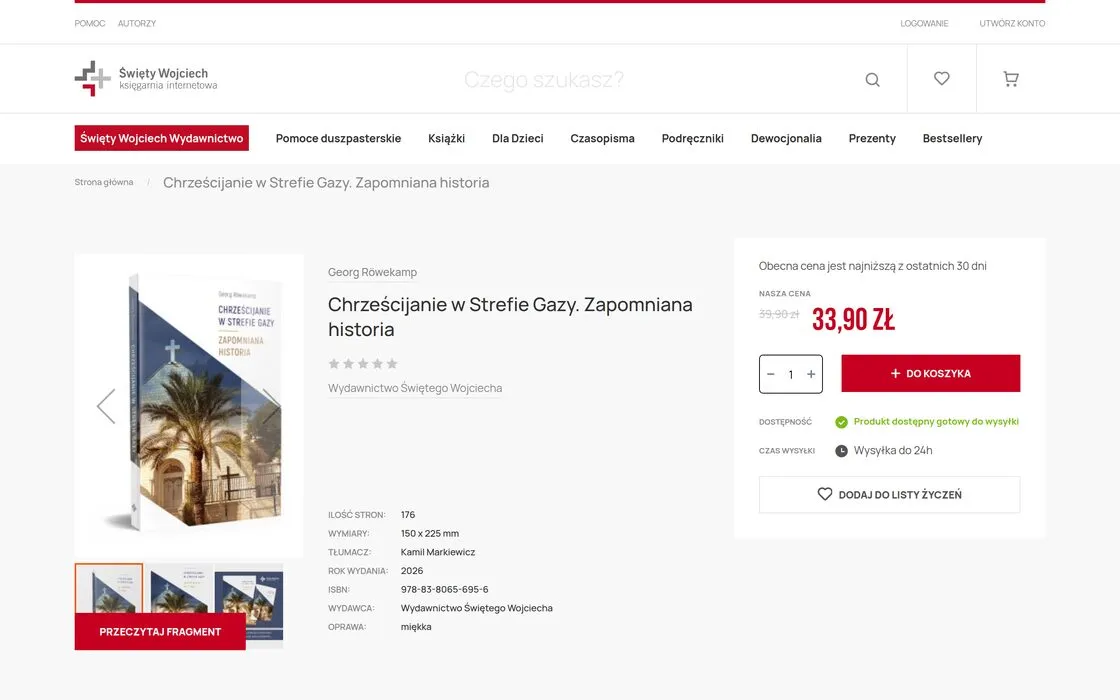
Product priorities
The admin panel gained the ability to set product priorities. The mechanism gives the publisher's own titles a higher position and lets the team manage where the remaining items stand.
Search on a book's attributes
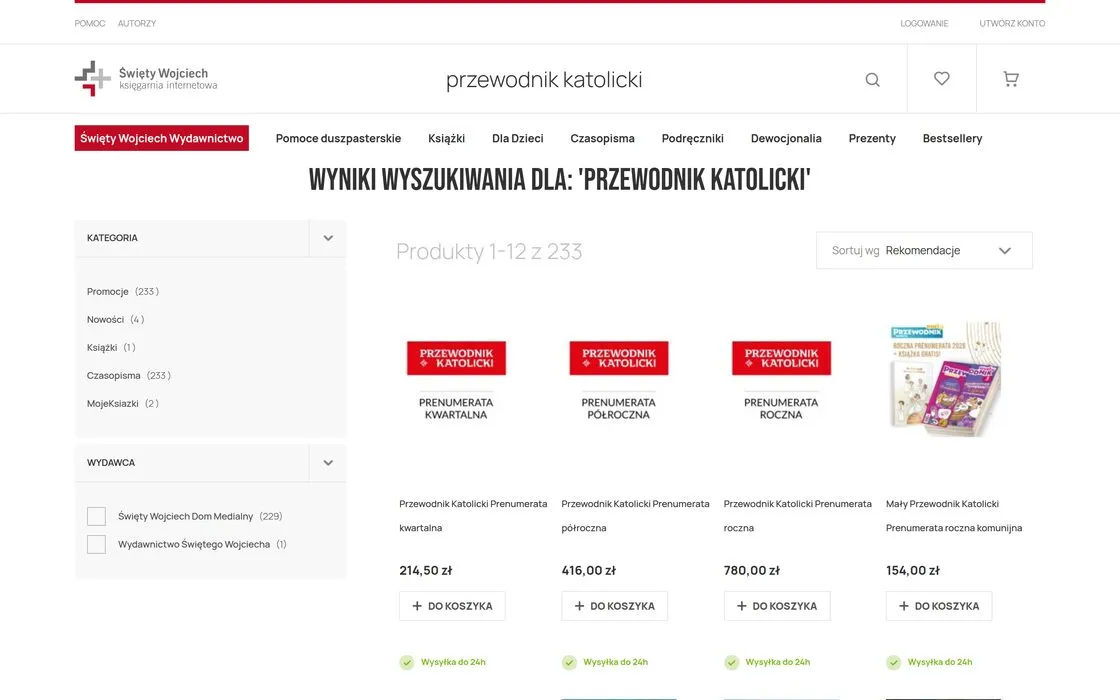
The Elasticsearch module was adapted to the bookshop's needs. A user can search for products by attributes such as title, author, publisher, keyword or publishing series.
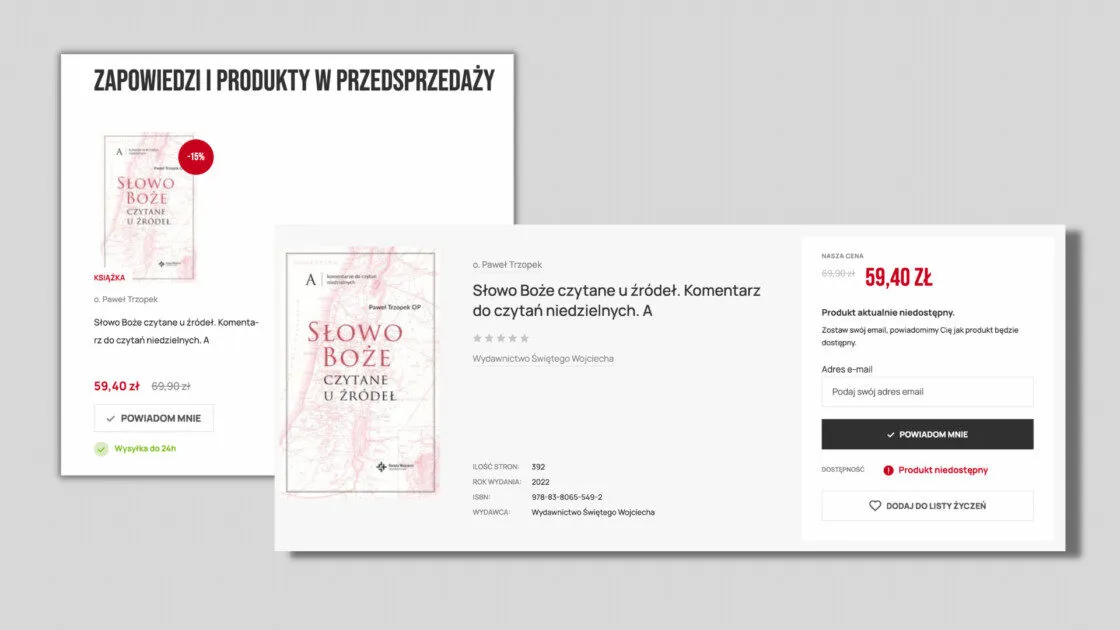
Pre-orders and announcements
Dedicated product pages were built for pre-orders and for announcements of new titles. A pre-order product can be ordered and is fulfilled once it reaches the store. An announcement stays unavailable to buy until the store team opens sales. Both groups also appear in a block of their own on the home page.
Product sets
A purpose-built tool joins volumes, later editions or similar items into one product set.
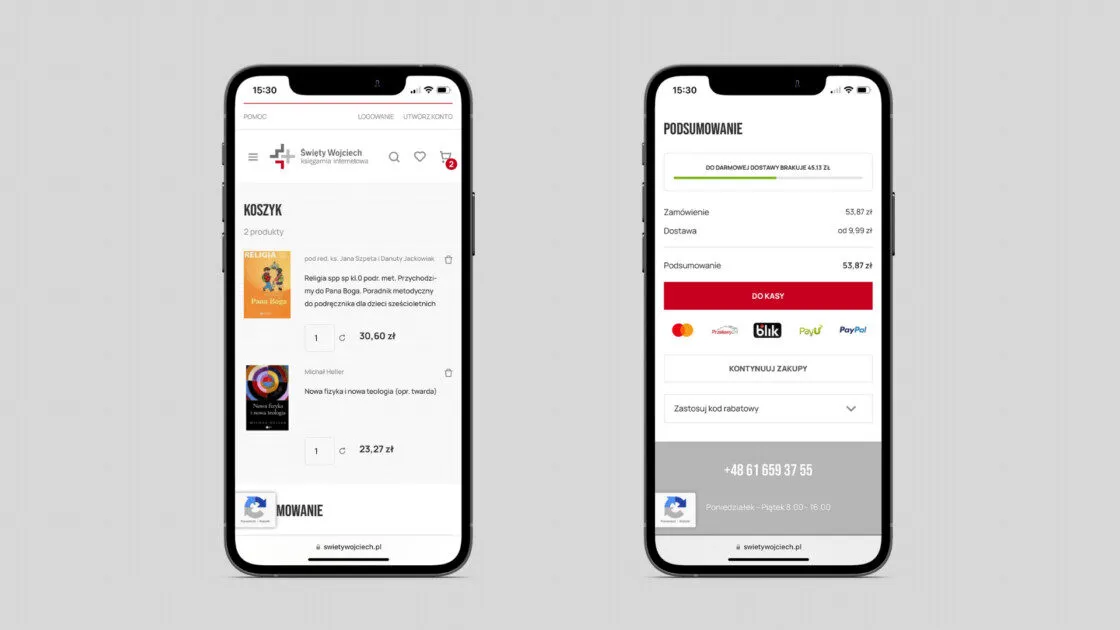
The amount still missing for free delivery
A purpose-built module works out and shows in the basket how much is still missing to reach the free-delivery threshold.
A new Magento 2 engine and the processes the bookshop needs to grow
Delivery ended with the bookshop running on Magento 2, together with the data migration, the integrations and the features its particular range calls for.

- Magento 2
- The new e‑commerce engine opened room to grow that the bookshop did not have before.
- Multistore
- Managing store content from one interface cut the time the technical side of e‑commerce takes.
- Bookshop features
- The features typical of an online bookshop made the store friendlier and easier to use.
- Elibri
- The integration made it possible to manage digital products securely.
The result is described by the scope that runs in the store today.
The Święty Wojciech implementation in detail
The project covered a change of e‑commerce platform, a data migration, integrations and the features that follow from how this bookshop sells.
Discuss a similar project with our teamAs the Święty Wojciech online bookshop grew, the engine it ran on proved insufficient. After an analysis of what the business needed, a new store was implemented on Magento 2.
The migration covered customer accounts, archived and current orders, records of e-books bought earlier and reachable from the customer account, and the blog: its articles, images and identifying data — see how we run a migration to Magento 2.
It covered connecting the store's stock levels to the ERP, exporting order statuses automatically from Magento to the ERP, and passing a fulfilled order's confirmation, together with the shipping label, from the ERP back to the sales platform.
It made the secure sale of digital items possible, gave unlimited access to purchased e-books and audiobooks from the customer account, and let the store team watermark digital files.
The exchange of information between Magento 2 and the ERP system was designed so that every subscription delivery is an order of its own, separate from the other products.
The scope covered the sample-of-a-book mechanism, magazine subscriptions, product priorities, an adapted Elasticsearch module, pre-order and announcement product pages, the option of adding an mp3 file to a product description, product sets and a purpose-built „free delivery from…” module.
This project stands for three things worth knowing about Magento 2 implementations
- 01See the migration to Magento 2
Moving an existing platform onto Magento 2
The project covered leaving an engine that had stopped being enough and moving to Magento 2, together with the migration of customer accounts, orders, records of e-books bought and the blog.
- 02Get to know Magento 2
Magento 2 integrated with outside systems
Delivery covered an integration with Comarch ERP XL and a renewed connection between the new platform and Elibri.
- 03See how we develop a Magento 2 store
Features that follow from a way of selling
The scope covered subscriptions, digital products, PDF samples of books, product priorities, pre-orders, announcements, product sets, additional audio material and the module tied to free delivery.
See other projects
Two projects where the same threads return: Magento 2 tied to an ERP system, and several stores run from one installation.
 Implementation
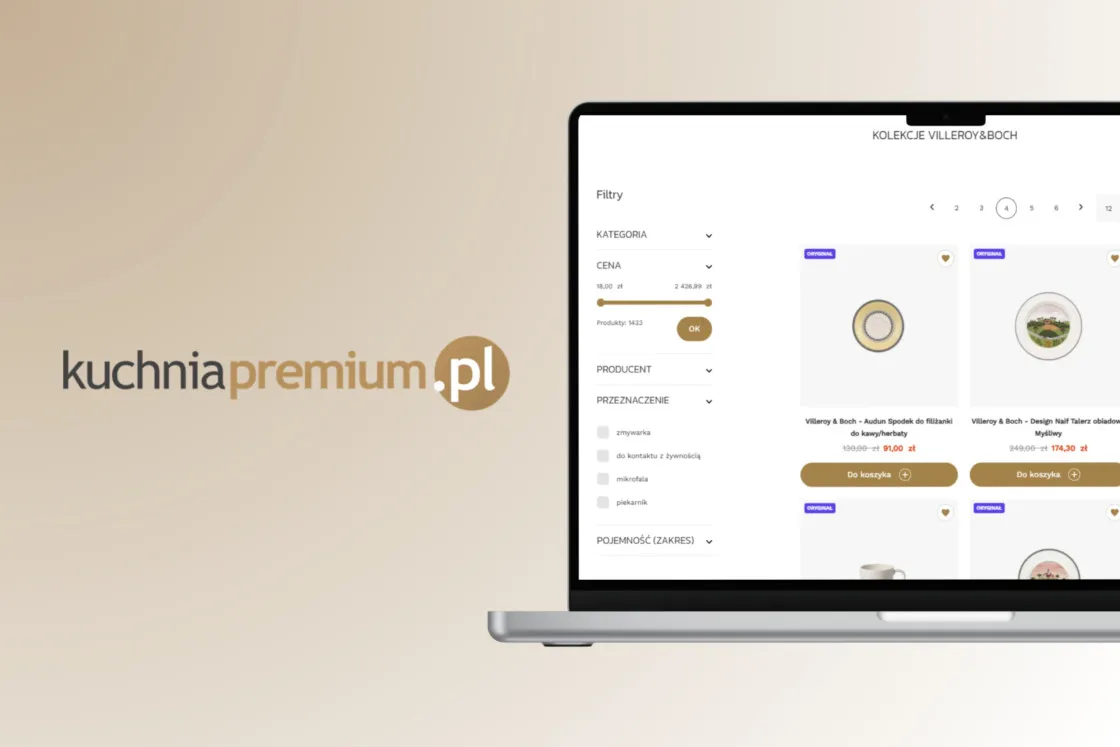
Kuchnia Premium: Magento 2, an ERP and stock in several warehouses
The store of a distributor of premium kitchen brands, implemented on Magento 2 and tied to the Subiekt ERP and to BaseLinker, with several storefronts run from one panel.
See the case study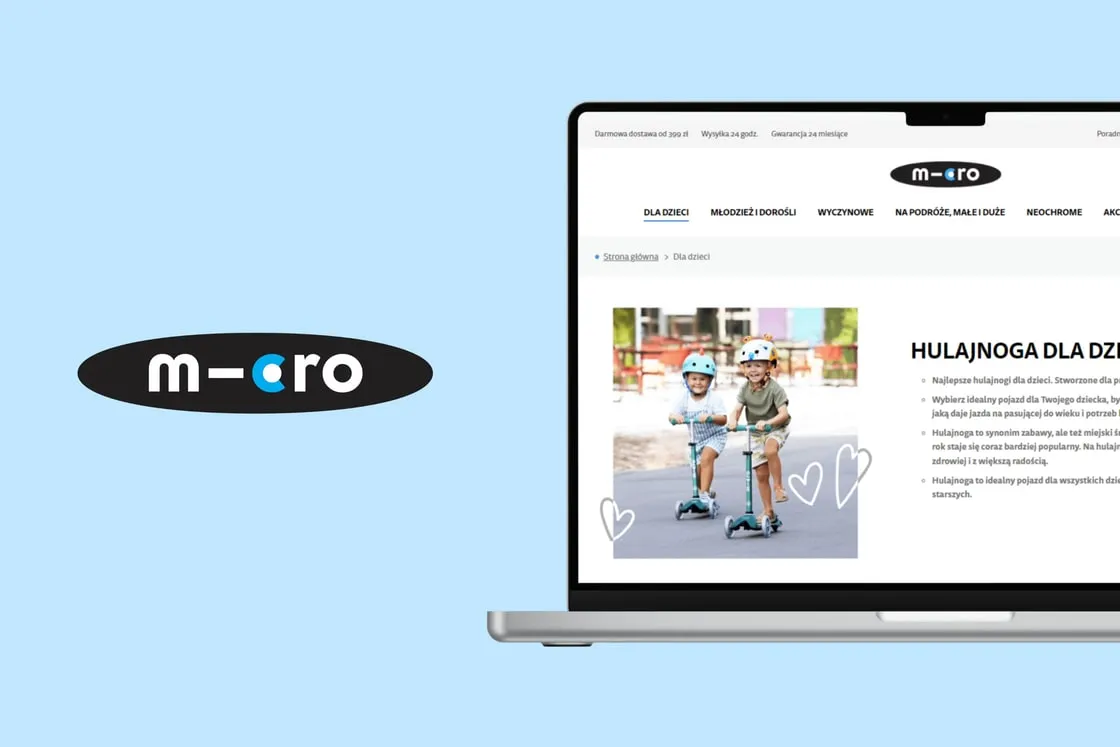 Implementation
Hulajnogi Micro: a Magento 1 migration and B2B sales
The store of the Micro brand's distributor moved to Magento 2 together with accounts for trade partners and integrations with outside systems.
See the case study
Planning a Magento 2 implementation with a data migration or integrations?
Tell us about your current platform, the data that has to move, the systems the store has to be connected to, and the features the new solution needs most.
That is enough for us to agree the scope of the project and the next steps.

Enquiry sent
Thank you, we'll get back to you within 1 business day.
The enquiry has not been sent
We have marked the fields that need filling in or correcting.