



Mon Credo – a Magento 1 to Magento 2 migration and an omnichannel loyalty programme
- Magento 2
- Migration from Magento 1
- UX/UI
- ERP
- VIP programme
- Omnichannel
Key facts about the project
- Magento 1Magento 2
- A migration off the old platform and a new store built from scratch.
- 5 months
- Delivery time, from the design phase to launch.
- 4–5 hours
- The final switch-over window onto the new store during the launch.
- ERP integration
- The new store was connected to the client's ERP system.
- VIP programme
- A loyalty programme running online and in the salons, moved across with customers' points.
Project scope
- a new store built from scratch on Magento 2
- UX/UI design delivered together with Ideacto
- data migration
- integration with the ERP system
- migration of the VIP programme and loyalty points
- testing
- launch of the new store
Technologies
- Magento 1 — the source platform
- Magento 2 — the target platform
- ERP — the system integrated with the store
Magento 1 was increasingly limiting the store's development
Aurora Creation had previously looked after the Mon Credo store running on Magento 1. From that vantage point the growing technology problems were visible, which is why we proposed a migration to Magento 2 to the client.
Magento 1 was no longer supported by the vendor, which meant no security updates and limited room to grow. At the same time the store had performance problems — adding a product to the basket took a long time to load.
The design and the UX needed changing too. The client kept the existing store running but, given the platform's limits, was not investing in developing it further. Connecting online and in-store sales was another important area, particularly around the loyalty programme.
The decision was to build a new store on Magento 2 from scratch rather than upgrade the existing one. Changing platform was also the moment for a new UX/UI, and the scope covered what had to survive the move: the data, the ERP integration and the VIP programme.
What had to be solved before the migration
- 01
No support for Magento 1
Magento 1 was no longer supported by the vendor, which meant no security updates and limited room to develop the platform further.
- 02
Poor store performance
Adding a product to the basket took a long time to load, which hurt the user experience.
- 03
Dated design and UX
Visually and functionally, the store no longer met current e‑commerce expectations.
- 04
Limited room for development
The client kept the store running but was not investing in it, given the limits of the existing platform.
- 05
Joining online and in-store sales
The project had to account for the loyalty programme that Mon Credo customers use both in the online store and in the salons.
From understanding the requirements to launching on Magento 2
The project covered an analysis of the client's needs, a new UX/UI, building the store on Magento 2, the ERP integration, testing, and a planned migration and launch.
We describe the same sequence — from agreeing the data scope to the launch window — on the service page.
Store migration to Magento 2- 01
Requirements and project scope
The project started with a kick-off meeting with the client. It established the business needs and expectations, and the most problematic parts of the existing store. A list of the features wanted was agreed and visual and functional references were collected. The VIP programme and the integration with the offline channel got particular attention.
- 02
UX/UI design with Ideacto
Ideacto was responsible for the design. The process covered meetings on UX requirements and visual concepts, „look and feel” prototypes, a style guide and sign-off on views by the client. The design was to keep the brand recognisable while bringing the store up to date.
- 03
Building the store from scratch on Magento 2
The new store was built from zero on Magento 2. Backend tasks started while the design work was still in progress. Once views were approved, tasks and estimates were agreed and progress was presented at regular status meetings. The build also covered the integration with the ERP system.
- 04
Technical testing and business verification
A tester verified individual views as the work progressed. Before launch the whole store, the checkout process and the key features were tested. The client checked delivery methods, payments, contact details and other business parameters, among other things.
- 05
Migration and launch of the new store
The launch started with agreeing a date and stopping the old store. Customers, products, discount codes and loyalty points were then imported. Once the domain was switched over, the systems were verified and the store officially opened on Magento 2.
How the launch ran
- 01agreeing the launch date
- 02stopping the old store
- 03importing customers and products
- 04importing discount codes
- 05importing loyalty points
- 06switching the domain over and verifying the systems
- 07the official opening of the store on Magento 2
4–5 hoursmoving over to the new store
Magento 2, the ERP and a loyalty programme spanning two sales channels
The new store was built on Magento 2 and integrated with the ERP system. The VIP programme, which customers use both online and in the salons, was an area of its own.
During the migration all loyalty points were moved from Magento 1 to Magento 2. The figure draws the direction of the data migration and the ERP integration.
Magento 1source platform
Data migration
- customers
- products
- discount codes
- loyalty points
Magento 2the new store
System integration
ERPThe new store was integrated with an ERP system.
Context
VIP programme
A programme used online and in the salons.
Migrating the VIP programme with customers' points intact
Moving the loyalty programme was one of the most demanding parts of the project. Mon Credo customers use their points both online and in the salons, so the benefits they had collected had to survive the migration.
What moving the programme covered
- 01Migrating all loyalty points from Magento 1 to Magento 2.
- 02Keeping the benefits customers had collected.
- 03Continuity of a programme used in both online and in-store sales.
Loyalty points were part of the data imported during the launch of the new store.
Let's talk about a Magento 2 migration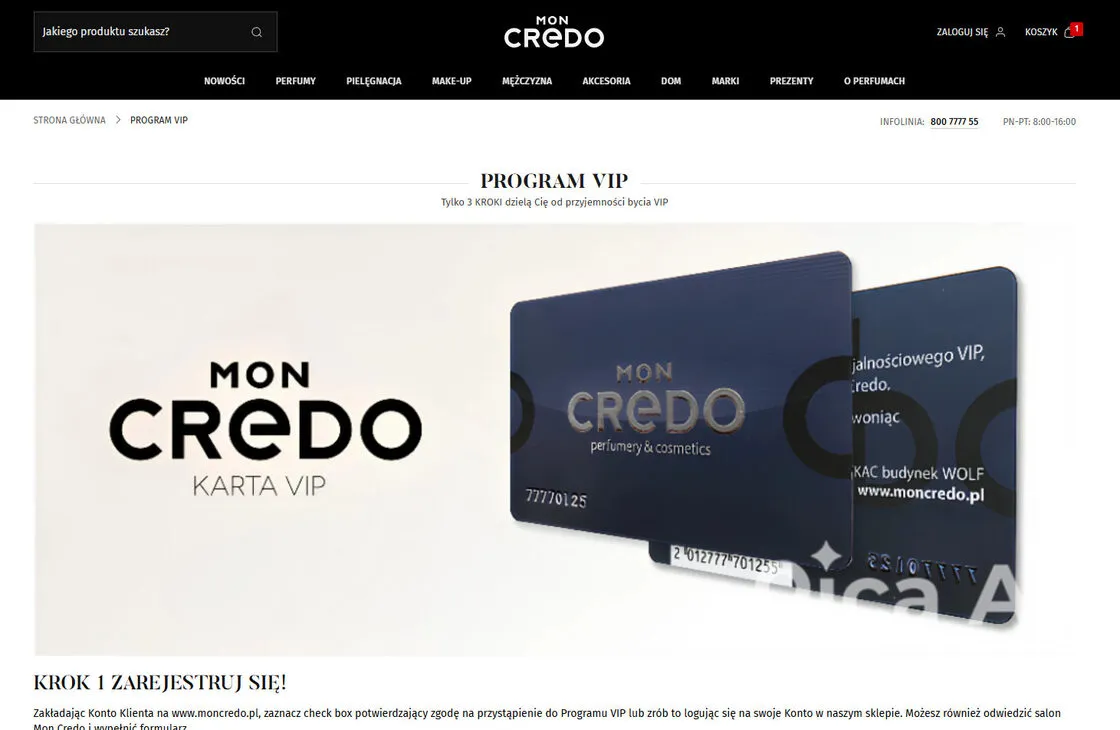
Selected parts of the new store
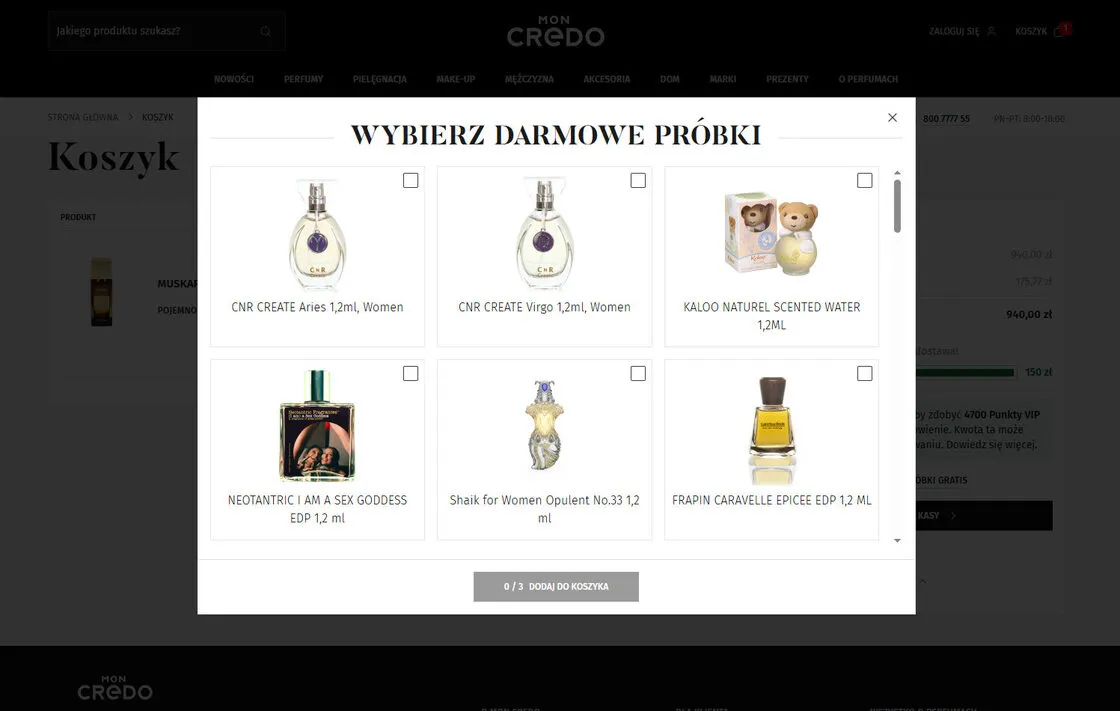
VIP points earned in the basket
The basket shows how many VIP points the order will earn, and it is where the free-samples picker opens from. This is the point at which the loyalty programme meets the order.
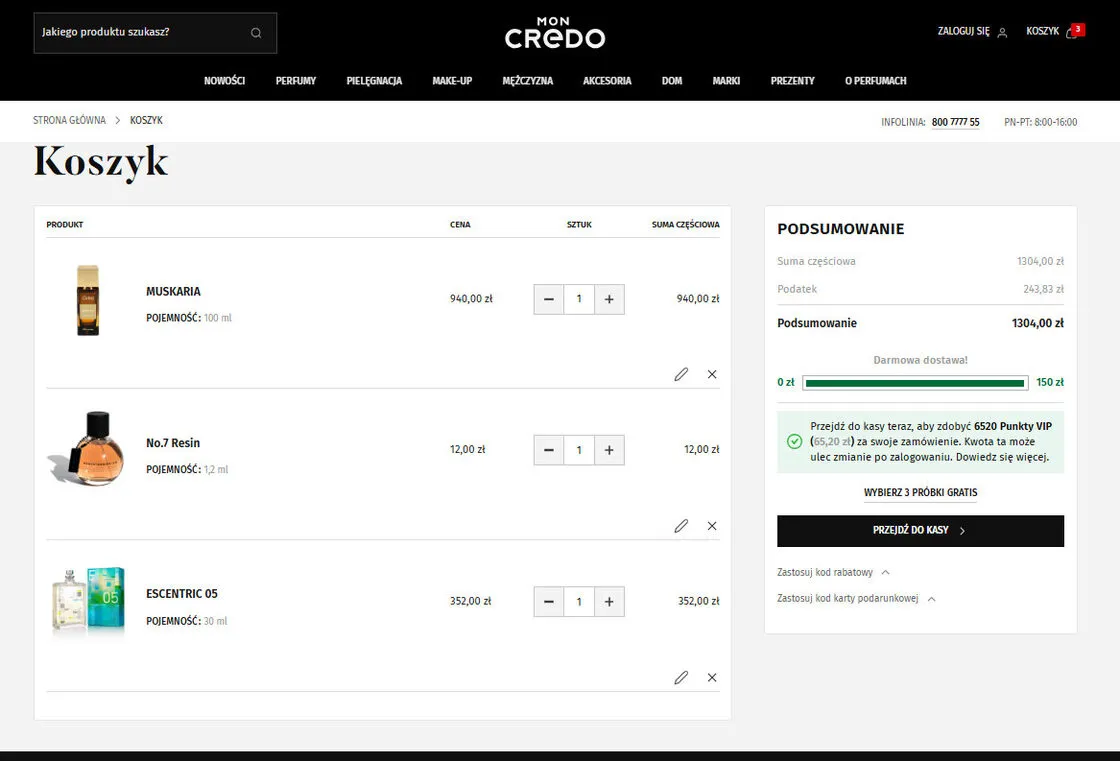
Customers pick their own free samples
The store gained a feature that lets customers pick free samples themselves once the order passes a set value.
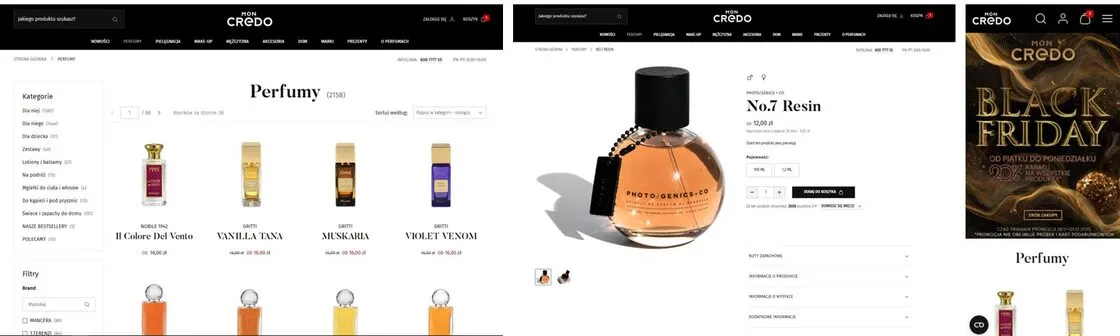
A new UX/UI for the store
Ideacto produced the design. It covered UX requirements, visual concepts, „look and feel” prototypes, a style guide and the client's sign-off on views. The approach was to keep the brand recognisable while modernising the shopping experience.
A new Magento 2 store with better performance and room to grow
After 5 months of work, Mon Credo moved off Magento 1 onto a store built from scratch on Magento 2.
The new platform leaves room for further development without the technology limits Magento 1 imposed, and the store gained better accessibility on mobile devices.
- Magento 2
- A new, supported platform now runs in place of Magento 1.
- Better performance
- Pages load faster and products go into the basket smoothly.
- VIP programme
- Customers' points were kept, along with the continuity of a programme used online and in the salons.
- New UX/UI
- A new design by Ideacto was implemented, keeping the Mon Credo brand recognisable.
The experience from this project matters in comparable Magento migrations
- 01Migration to Magento 2
Migrating from Magento 1 to Magento 2
For stores running on Magento 1 that plan to move to Magento 2 together with their customers, products, discount codes and loyalty programme data.
- 02See our Magento 2 services
A new Magento 2 store combined with a redesign
For projects where moving to Magento 2 also means building the store from scratch and designing and implementing a new UX/UI.
- 03Let's go through the scope
Migrating a loyalty programme and integrating an ERP
For projects where the move to Magento 2 has to account for an existing loyalty programme and for integrating the new store with an ERP system. The Mon Credo project covered both.
Frequent questions about the Mon Credo project
The key facts about the migration, the scope of the build and the launch of the new store.
The existing store ran on Magento 1. The project covered the migration and building a new store from scratch on Magento 2. We describe the scope of a comparable project on the migration to Magento 2 page.
The project took 5 months — from March 2025 to August 2025, counting from the design phase to the launch of the store.
The launch covered the import of customers, products, discount codes and loyalty points.
Ideacto was responsible for the design. The process covered design meetings, „look and feel” prototypes, a style guide and the client's sign-off on views.
Yes. The build included an integration with the ERP system.
All loyalty points were moved from Magento 1 to Magento 2. Customers use the programme both in the online store and in the salons.
See other projects
Two projects that also started from live sales: a build taken over mid-way, and a move off a SaaS platform.
 Implementation
SklepBaterie.pl: a taken-over implementation and catalogue foundations put in order
Taking over a project already under way, migrating around 181,000 products and launching Magento 2 with a Hyvä frontend.
See the case study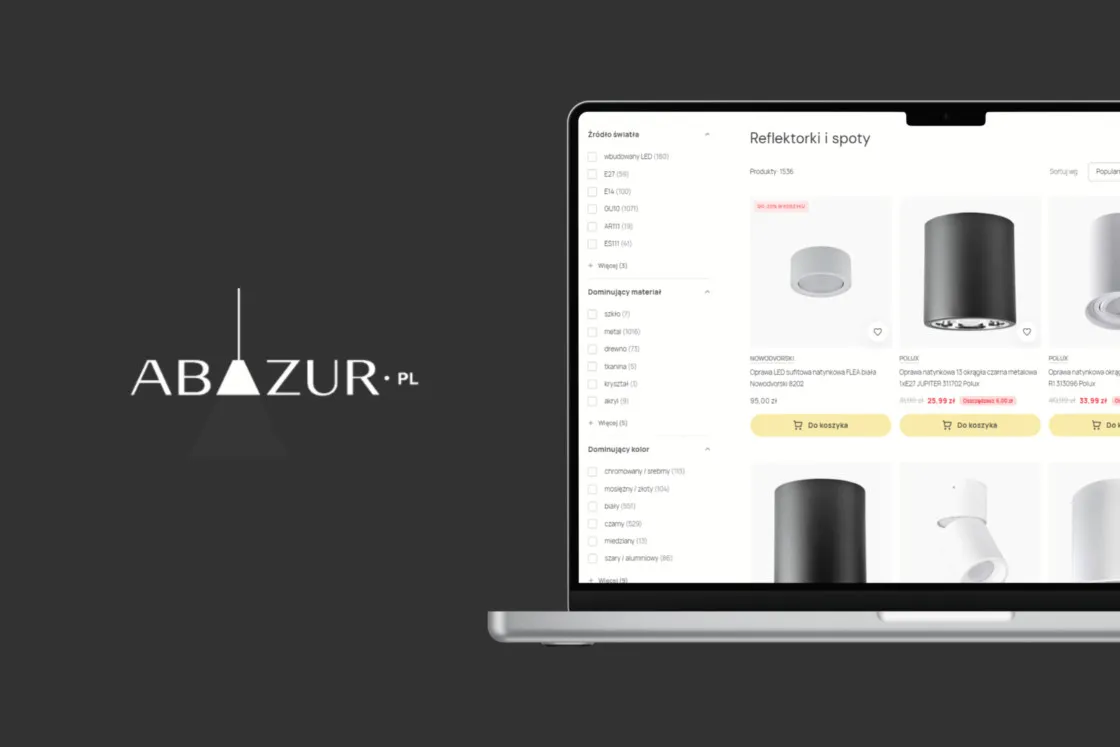 Migration
Abażur: from a SaaS platform to Magento 2
Moving a lighting store off a SaaS platform, together with a rebrand, multi-warehouse handling and filtering for a large catalogue.
See the case study
Is your store still running on Magento 1?
Tell us how the current store works, which data and features have to survive, and which systems it is connected to.
From there we can establish what a migration and a Magento 2 build would have to account for.

Enquiry sent
Thank you, we'll get back to you within 1 business day.
The enquiry has not been sent
We have marked the fields that need filling in or correcting.