



Abażur – a migration to Magento 2 and multi-warehouse stock
- 100+ product attributes
- a dozen-plus levels of filtering
- Magento 2
- SaaS migration
- Multi-warehouse stock
- UX/UI
- Mobile first
- Development and maintenance
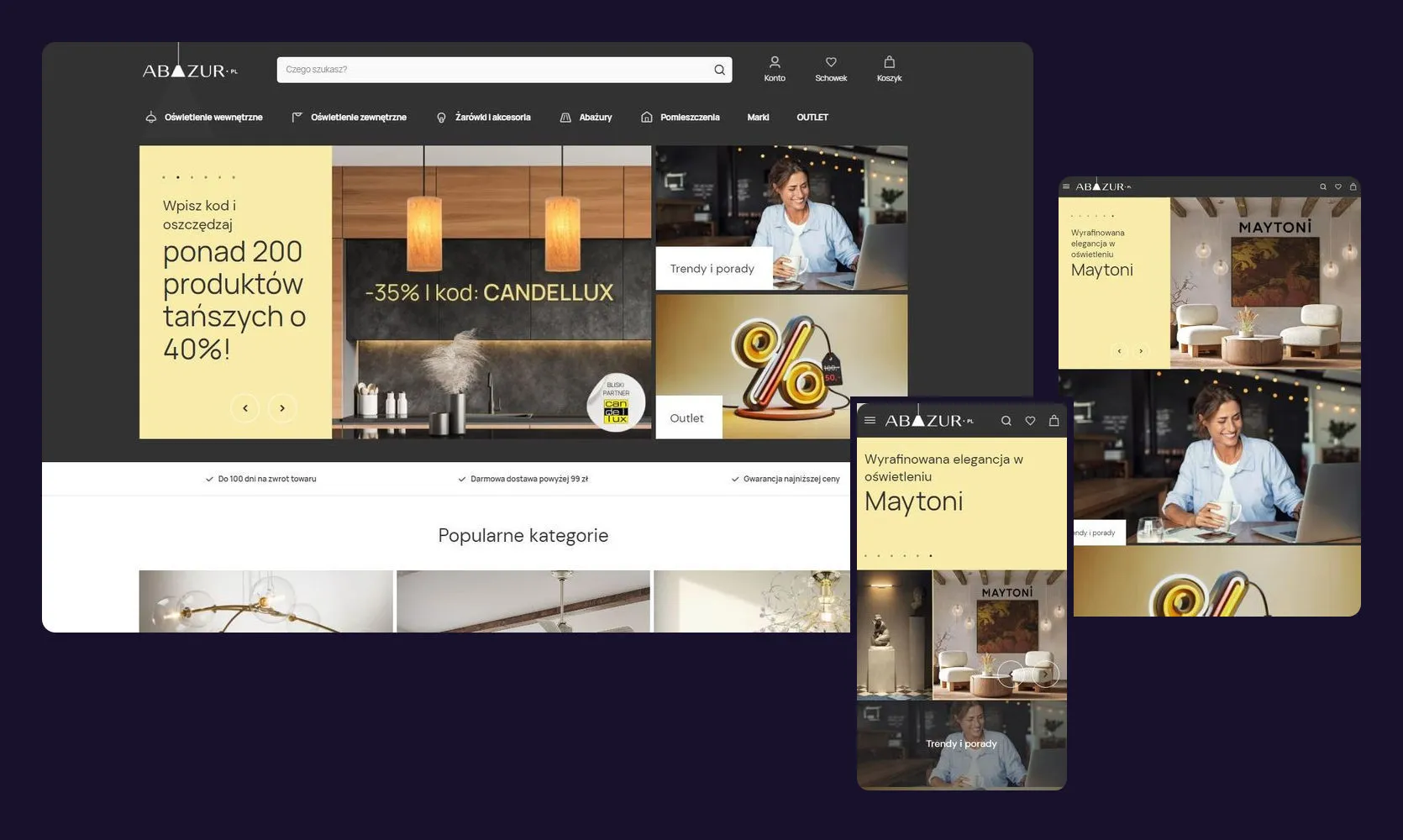
Key facts about the project
Magento 2
The platform the Abażur store was moved to.
2
Design directions prepared while the new visual identity was being created.
a dozen-odd
Levels of filtering the store uses.
over 100
Attributes available in the store's extensive product filtering.
Project scope
A rebrand and a change of visual identity, migration to Magento 2, multi-warehouse stock, a module tracking a product's delivery time, extensive filtering, and development and maintenance.
Technologies
Magento 2.
The existing platform no longer matched the store's growing needs
The owners of Abażur wanted to be able to scale the business, grow sales and keep widening the product range. The previous platform had stopped meeting the company's growing needs.
The store had been running on SaaS software. That turned out not to be enough, and it caused problems both for the people running the store and for its customers.
The answer was an e‑commerce build on Magento 2. During the first conversations the scope was widened to include a refresh of the visual identity along with the whole store interface.

Migrating a live store onto a new Magento 2 engine
- 01
Coordinating the migration of the whole back end
The biggest challenge named in the project was coordinating the migration of the previous store's entire back end to Magento 2. The process had to be properly prepared before the new system was configured.
- 02
The risk of losing data in the change of system
Configuring Magento 2 for an analytics and organisational back end that was already running carried a significant risk of data loss, which made preparing the migration properly critical to the project.
From a new visual identity to the Magento 2 build
The work began with the visual identity. Once the design direction was chosen, the store itself was designed, and the Magento 2 build and the platform's further features followed.
See a D2C implementation on Magento 2- 01
Designing the new visual identity
Two design directions were prepared. After the client's decision, the chosen one became the basis for the design of the new online store.
- 02
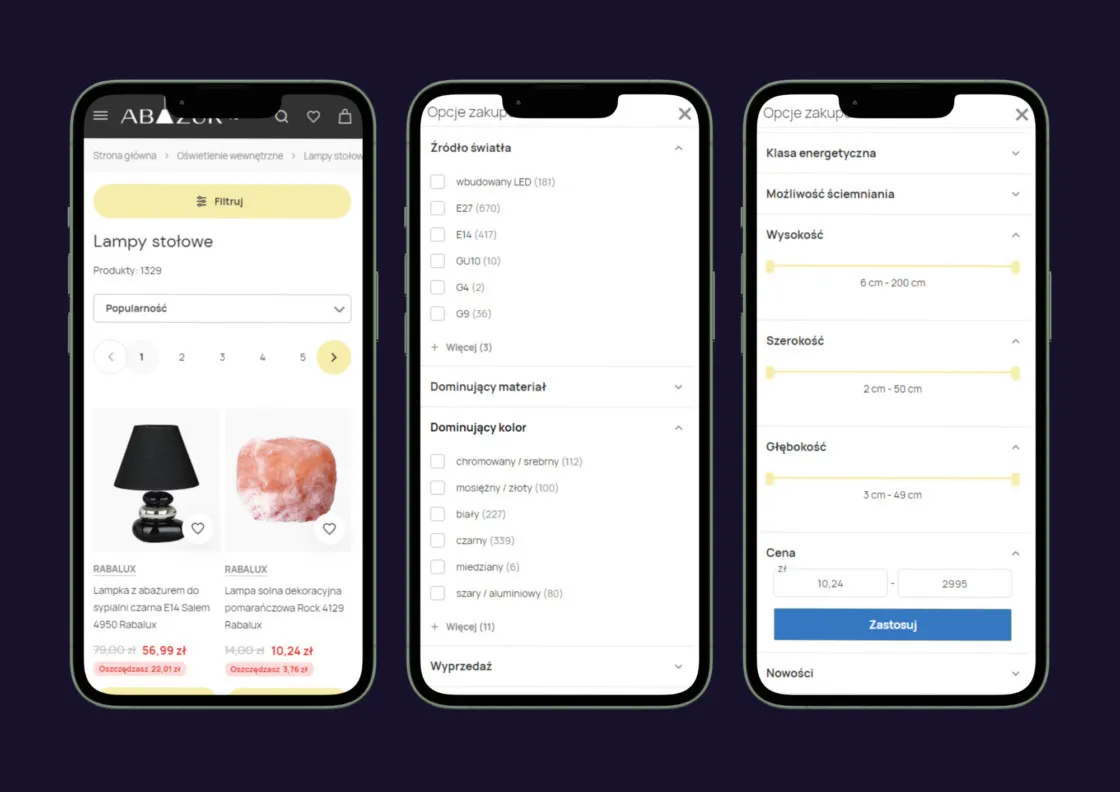
A mobile-first UX/UI design
Abażur chose the classic combination of graphite and yellow. The interface was designed mobile first, with close attention to people shopping on mobile devices and to a simple path to purchase.
- 03
Migration to Magento 2
Once the design work was finished, the new store was built on Magento 2 and the back end was migrated off the previous SaaS-based platform.
- 04
Features for the product range and deliveries
The platform was extended with a bespoke multi-warehouse module, a module showing a product's estimated delivery time and extensive filtering.
- 05
Development and maintenance
The engagement also covers developing and maintaining the store: monitoring and optimising the platform, technical support and working together on what comes next.
A bespoke multi-warehouse module for Abażur
The store runs a bespoke multi-warehouse module that makes managing the product range easier.
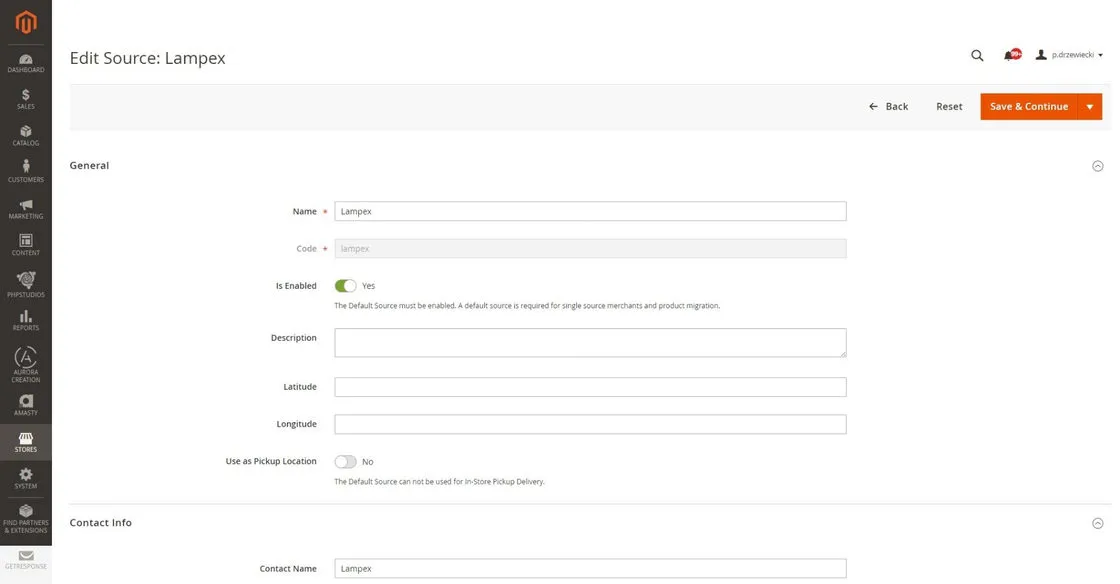
How the module works
- 01Distributors can add products on the platform.
- 02Delivery times and current stock levels are updated automatically.
- 03The current information is shown on the product pages.
Automating the work around the product range takes load off the e‑commerce team. As the project description puts it, that means more time and resources for developing the store and the shopping experience.
See AURORA EVOLUTIONThe key parts of the build
A new identity and a mobile-first interface
The project began by creating a new visual identity. Of the two directions prepared, the client chose the one built on graphite and yellow. The store's UX/UI was then designed mobile first on that basis.
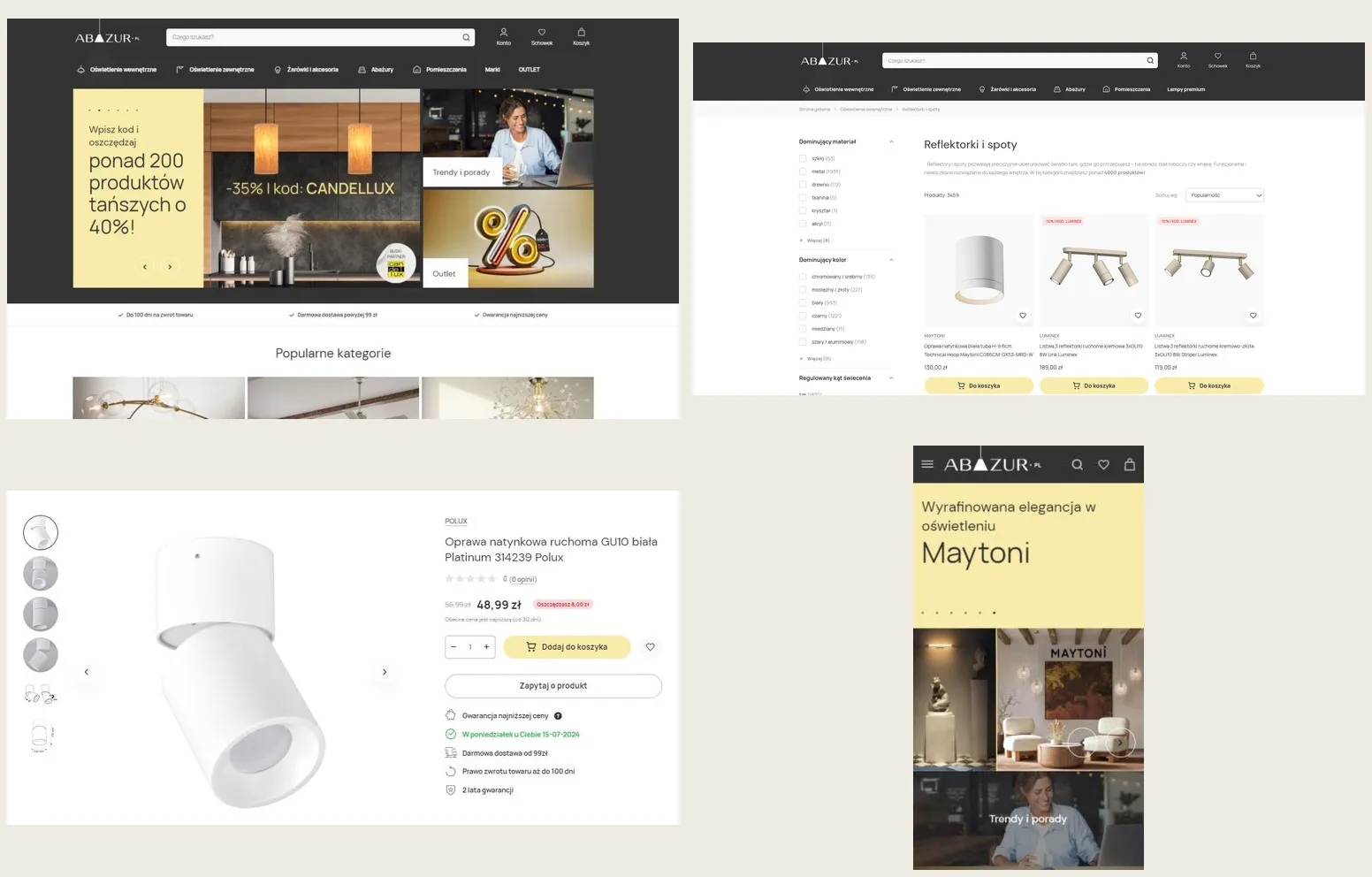
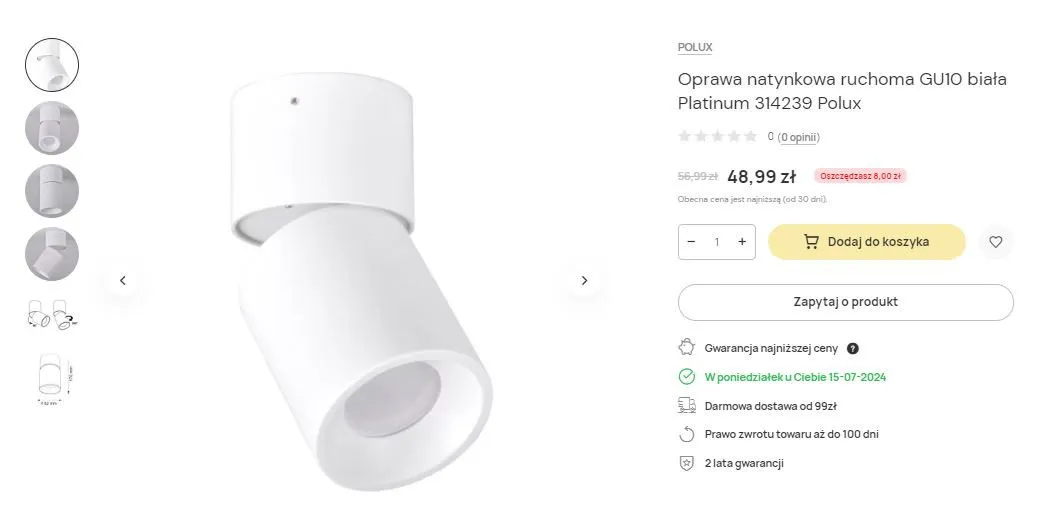
An estimated delivery date on the product page
The store carries a module showing the estimated delivery time of a specific product, so a customer can quickly see how long the wait for a given item will be.
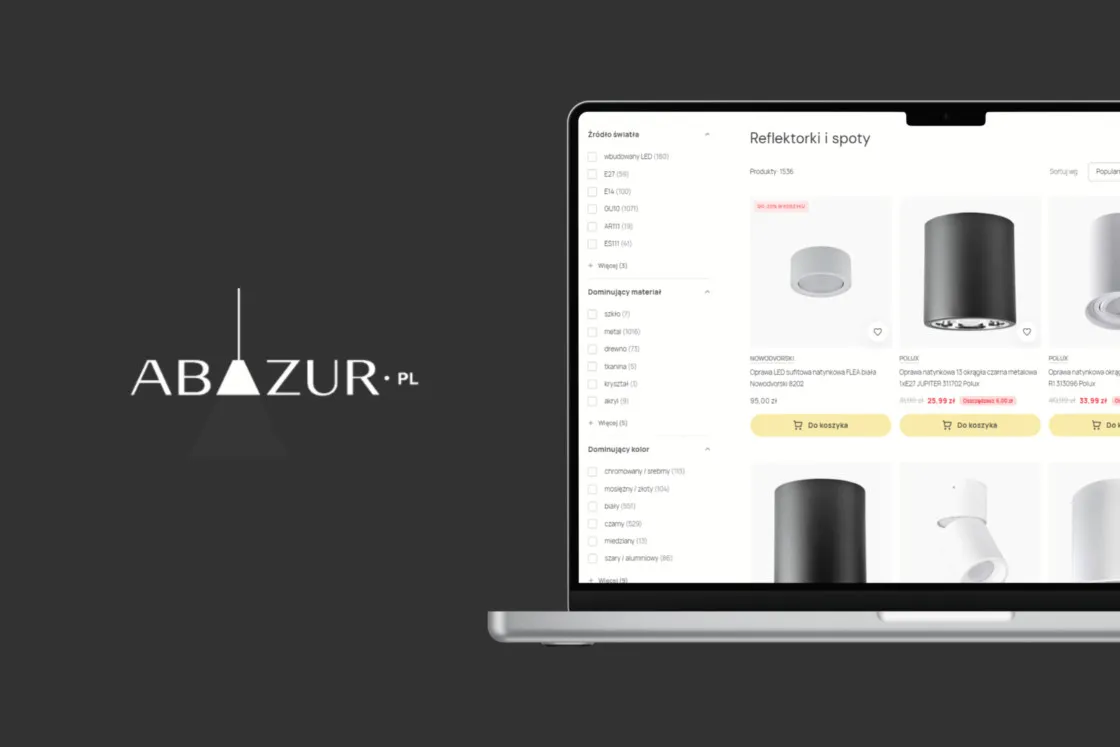
A dozen-odd levels of filtering and over 100 attributes
Because of what it sells, the store uses a dozen-odd levels of filtering and over 100 attributes. That lets trade professionals and individual customers alike find products that match what they need.
A Magento 2 platform ready to scale the store further
Building on Magento 2 and fitting the platform to Abażur's needs made it possible to automate many processes and to scale sales quickly. The project combined the change of e‑commerce system with a new identity, a mobile-first interface and features supporting both the product range and the shopping itself.
- Automated processes
- Fitting Magento 2 to the store and the features built into it made automating many processes possible.
- Scaling sales
- As the project description puts it, moving to Magento 2 lets the brand scale sales quickly.
- An expert image
- The refreshed visual identity and the new interface helped the brand build an expert image.
The change of visual identity and interface also helped the brand build an expert image.
Frequently asked questions about the Abażur project
The key facts about the migration, the scope of the build and the store's features.
Let's talk about your migrationThe owners wanted to be able to scale the business, grow sales and keep widening the product range. The previous platform had stopped meeting the company's growing needs.
The previous store ran on SaaS software.
The work covered a rebrand and a change of visual identity, migration to Magento 2, multi-warehouse stock, a module tracking a product's delivery time, extensive filtering, and developing and maintaining the store.
Distributors can add products on the platform, and the key information — delivery times and current stock levels — updates automatically on the product pages.
The store uses a dozen-odd levels of filtering and over 100 attributes. Both trade professionals and individual customers use it.
Yes. Development and maintenance are part of the scope of work. That support covers monitoring and optimising the store, technical support and working together on what comes next.
This project is evidence in three areas of Magento 2 work
- 01See a migration to Magento 2
Migrating from a SaaS platform to Magento 2
The Abażur project meant leaving the SaaS software behind, migrating the previous store's back end and building the new platform on Magento 2.
- 02See AURORA EVOLUTION
Extending Magento 2 with bespoke features
Abażur runs a bespoke multi-warehouse module, a module showing estimated delivery times and extensive product filtering, among other things.
- 03See AURORA CARE
Developing and maintaining the store
The engagement also covers developing and maintaining the platform: monitoring and optimisation, technical support and working together on what comes next.
See other projects
Two more Magento 2 stores: one moved off Magento 1, the other taken over mid-build — because the starting point of a migration rarely looks the same twice.
 Migration
Migrating the Mon Credo perfumery from Magento 1 to Magento 2
A live premium store moved along with its customer data, an ERP integration and a loyalty programme used both online and in the brand's salons.
See the case study Implementation
SklepBaterie.pl: a Magento 2 build with Hyvä, taken over
Catalogue foundations put in order, data migrated from CS Store and existing URLs preserved through the change of platform.
See the case study
Is your current store holding back your growth?
Tell us which platform your e‑commerce runs on today, what needs to change and which features you need in the new solution. On that basis the Aurora Creation team can work out what the next conversation about the project should cover.

What to include in your enquiry
- The platform your store runs on today
- What needs to change in the current solution
- The features you need in the new store
Enquiry sent
Thank you, we'll get back to you within 1 business day.
The enquiry has not been sent
We have marked the fields that need filling in or correcting.